Where should a child start learning to program?
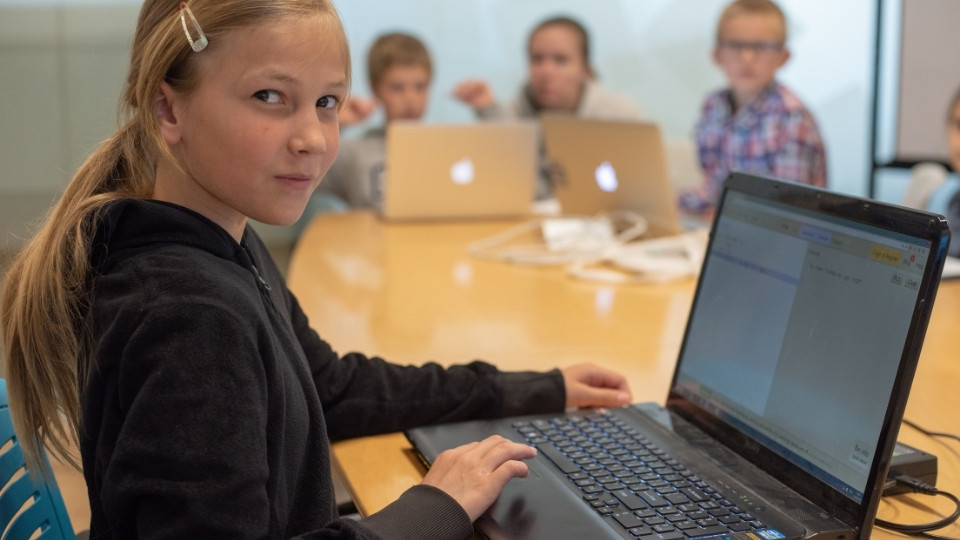
If a child spends all their free time on a screen, you do not necessarily have to pull them away from it. That interest can be put to good use. Understanding this, more and more parents want to know how to get a child interested in programming and open new horizons for them. That is what this article is about.
How to get a child interested in programming, and why start early
Teenagers rarely give much thought to the career they will build their life around. A profession can be changed, new interests can be found, and who knows where life will take you in a few years. So how do you interest a child in programming when talk of careers does not motivate them and complicated technical terms only produce a long yawn? By taking on the challenge and building the teaching accordingly.
To teach a child to program, the knowledge has to arrive in an approachable form, through play or through making things. Let the first steps in tech connect to something the child already enjoys. The practical side matters just as much. Discussing abstract problems is one thing; building a product yourself is quite another. The two secrets to getting a child interested are making the learning enjoyable and giving them a chance to reach visible results.
The saying that children soak things up like a sponge is true. School-age children are growing and developing fast, and their brains are trained on taking in new information — an ideal moment to introduce them to tech. The basic concepts can be picked up comfortably in primary school, with harder languages and ideas to follow. Which raises the next question: where should a child start, so that the process comes easily and enjoyably?
Where a child should start
One of the key steps is choosing a language. There are a few options:
- Scratch. A visual programming language for the youngest students. The code is made of blocks and looks like a jigsaw. Here a child learns to build animations, simple games and interactive stories.
- Python. For a slightly older child we recommend Python. Professionals use it, and it is learned much the way English is: no complicated constructs, no elaborate hierarchies.
- JavaScript. A good option for anyone who already has the basics and wants to keep developing in tech.
Parents need to think not only about where a child should start but about how to pick the right course for them. Age, current level and personal preferences all matter. If writing code does not click, web design is worth a look. What matters is that both parents and teachers show the child what digital technology makes possible.
Using real projects to build interest
PASV instructors put the emphasis firmly on practice. We know that the best way to teach a child to program is to help them build an application or a game of their own. When a project becomes real and works — when it can be used and shown off proudly to friends — interest in the field grows enormously. Better still, the product can be tied to what the child already cares about: sport, logic games, drawing and so on.
To develop a child's creativity, broaden their skills and help them realise their potential, enrol them at PASV. We know how to get a child interested in programming and turn learning into something they look forward to.