Online or in person: which format works better for learning?

Educational options today are more varied than they have ever been. As technology has developed we have gained access to online courses, webinars and other forms of distance learning. Yet traditional in-person study remains popular.
Every person is different, and we all take in information differently. Some need a strict working atmosphere with a classroom and a firm schedule; others absorb material better listening to lectures through headphones.
So how do you choose the format that suits you? Let's go through the advantages and drawbacks of each.
Studying online
Online study has substantial advantages:
- Online courses let you learn at any time and in any place. That is particularly convenient for people with full schedules or anyone fitting study around a job.
- The internet offers a great many courses from leading universities and experts. You can choose from a wide range of subjects and directions.
- You do not have to spend time travelling to an institution, which also saves you the fare and other costs.
- You can learn at your own pace, go over the material as many times as you need and not chase anyone else.
Alongside those, there are difficulties:
- The most obvious is self-discipline. Without a firm timetable and an instructor keeping an eye on you, staying motivated and finishing a course can be hard.
- The lack of face-to-face contact is also felt. You can feel isolated without the chance to ask an instructor a question in real time.
- And nobody is immune to technical problems. Freezes, a poor connection or missing equipment can all get in the way.
Studying in person
Traditional in-person study takes place inside an institution and covers independent, group and one-to-one work as well as learning with a mentor.
- The format is familiar to everyone from school. A structured process comes more easily, there is plenty of face-to-face contact and you can get straight into practical work.
- Being in the room lets you interact with the instructor and your fellow students, which deepens your understanding of the material and lets you exchange experience.
- Attending regularly gives you a firm timetable, which helps maintain discipline and organisation.
But in an age of extraordinary speed, in-person study can leave neither time nor energy for anything else.
In-person classes require you to be in a particular place at a particular time, which can be awkward for anyone with a full schedule.
It is also worth bearing in mind the additional cost of travel, meals and everything else that comes with it.
So how do you choose?
Some practical advice on the factors worth weighing:
- Work out what you want to achieve. If you need flexibility, an online course may be the better choice. If you are after hands-on training, in person may be worth considering.
- Think about how you take in information best. If interaction and discussion matter to you, choose in person.
- Assess whether your schedule allows you to attend classes at set times. If you have a lot of commitments, online may suit you better.
- Look at which courses are available in your area or online, and pick the ones that match your interests and needs.
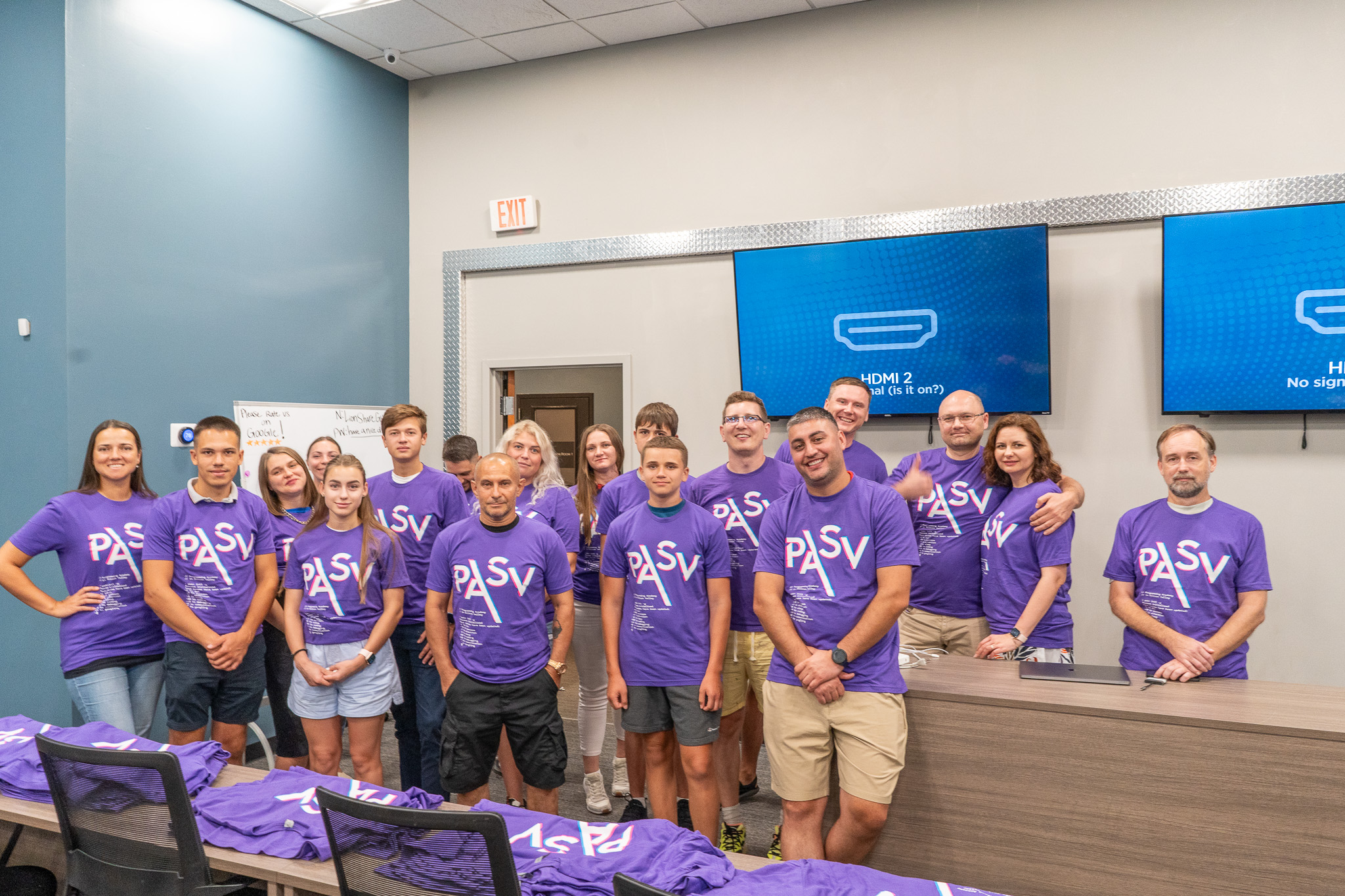
Here is a story from our own school. To give you a fuller sense of which format might suit you, we asked one of our graduates which they found more comfortable.
A graduate's experience
"Hello, everyone. My name is Alexey and I want to share my experience. I have tried both online and in-person study, and I liked each of them in its own way.
I started in person. I liked being able to talk to the teachers directly and ask about whatever was on my mind and get a proper explanation. I liked the firm timetable, which kept me disciplined and stopped me getting distracted.
But once I started working, combining study and a job got harder. So I decided to try studying online. It turned out to be very convenient: I could learn at any time and from anywhere, even from another country. I think that is excellent.
In the end, the combination worked best for me.
I like in-person study for practical sessions, and I liked being able to talk to my friends and sort things out on the spot, while online courses let me study a particular subject in more depth and more detail."
Both formats have advantages and drawbacks. What matters most is understanding your own goals and preferences. It may be worth trying both to work out which suits you. In the end, whichever route you take, what counts is the drive to learn and to keep growing.